Is Your Mole Benign Or Malignant? When To See A Dermatologist
Benign, Premalignant, & Malignant Skin Lesions Palm Beach Those people with hereditary nevi have a raised danger of creating melanoma. In time, an usual mole may continue to be the same, change very gradually, or fade away and go away. Determining all the moles on your body and monitoring their look is the very best means to make certain that you recognize their status and potential problems. Unique stains can be used to attempt and differentiate a mole from a skin lesion. If the sore is regarded to be malignant, various therapy choices can be talked about. Skin sores are an usual component of life, and obtaining prompt, appropriate medical interest can lower the danger of serious health issues. Regular skin checks and checking your moles for modifications are crucial to capturing potential concerns early. At Carroll Dermatology, we provide experienced care for a wide range of skin conditions beyond benign, premalignant, and deadly skin sores. Our services include acne evaluation and therapy, and administration of pigmentary conditions such as melasma, picture damage, brown areas, and cherry angiomas. You should see a skin specialist if you discover any kind of changes in your moles or if you have a new mole that looks unusual. Furthermore, if you have a family background of cancer malignancy or an individual background of skin cancer cells, routine skin checks are important. Also if your moles appear typical, it's a great idea to have a skin doctor review them during your annual skin test. A professional examination can offer satisfaction and guarantee that any suspicious moles are dealt with immediately. There are plenty of various other benign skin developments, including cysts, lipomas, freckles, and more. Whenever an unusual skin development happens, a visit to MD Blood vessel & Skin Specialists is a wise decision, since skin cancers cells are most convenient to treat with early medical diagnosis.
Exactly how to tell if a skin lesion is benign?
- Proportion in shape, colour and structure.Stable or slowly evolving.Absence of
- spontaneous blood loss(bleeding or ulcer might be because of recent injury).
- Your doctor may wish to get rid of a tissue example from the mole and biopsy it.
- Talk with your healthcare provider concerning exactly how frequently you need a skin test.
- While most moles are safe, it's essential to monitor them for any type of changes that can indicate an issue.
- The clinical importance of actinic keratoses stems from their recorded capacity to change into squamous cell cancer, a kind of hostile skin malignancy.
- Limitation your exposure to the sunlight's ultraviolet rays, particularly between 10 a.m
The Abcde Guideline For Cancer Malignancy Detection
Throughout a skin-related examination, your supplier will diligently take a look at any kind of worrying sores using specialized magnifying devices and progressed diagnostic methods. They may use dermoscopy, Angiomas a painless assessment approach that allows them to obtain a better sight of skin frameworks that are invisible during typical aesthetic inspection. Such situations can lead to unexpected, severe discomfort that might demand timely expert removal. This skin cancer cells photo gallery is sustained partially by Regeneron. If you have a lesion that is changing, irritating, or just something you would like examined, looking for professional guidance is the most effective first step towards a secure and effective lesion elimination. This capacity for complication makes professional analysis by a qualified skin specialist important for precise identification and patient confidence. Trying at-home therapies without appropriate diagnosis can result in issues or insufficient removal of skin sores. A dermatology carrier can figure out whether a lesion is benign and recommend one of the most appropriate therapy choice. Skin self-exams are really crucial if you go to threat for skin cancer cells. Get to know the pattern of moles, imperfections, freckles, and other marks on your skin. Securing yourself from harmful ultraviolet radiation discharged by the sun is especially essential for people that currently have a high number of normal moles or irregular moles. Kaposi's sarcoma is a malignant skin tumor sore that is a feature of as much as 20% of all male help (Acquired Immune Deficiency Syndrome) clients. Kaposi's sarcoma generally looks like purple lesions with silver scales on the feet and ankle joints that then spread out up the legs to hands and arms. It is a hostile and often deadly cancer and might trigger interior blood loss. Nonetheless, certain changes raise even more issue for early stage skin cancer, especially if they continue, grow, or adjustment in appearance. When you're identified with skin cancer, words "treatment" usually brings surgical procedure to mind. They are normally of blended color, including pink, red, tan, and brown. Benign lesions of the skin are non-cancerous developments that establish because of variables such as aging, genes, sunlight direct exposure, or small skin trauma. Although they are not unsafe, they might change in appearance or end up being uneasy with time.What Causes Skin Growths?
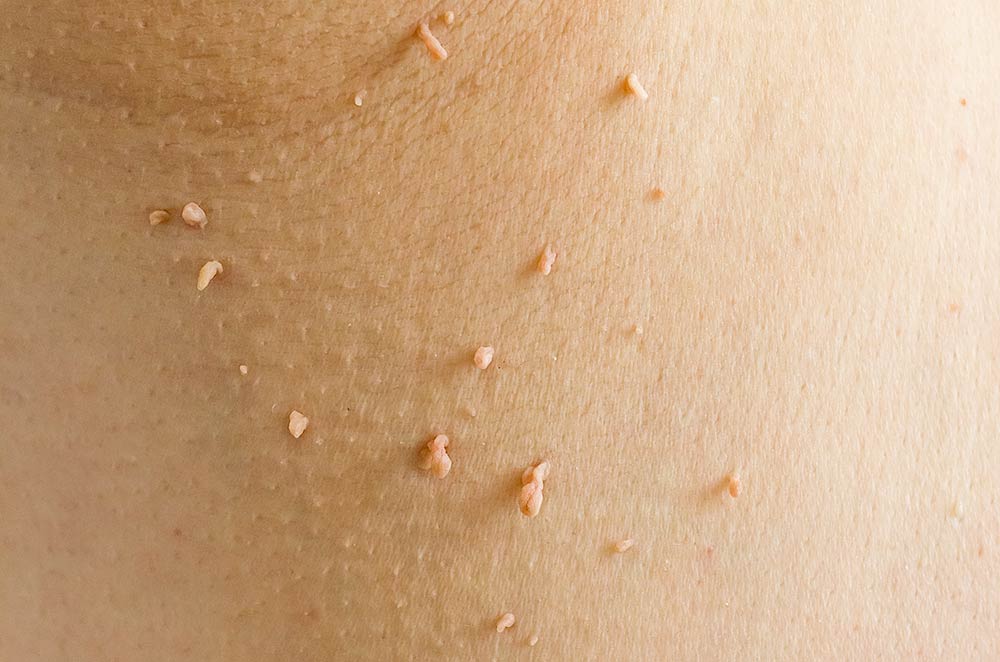
The majority of medical professionals advise regular surveillance of uncommon moles. While it is feasible for a dysplastic nevus to develop into a melanoma, the possibility is really reduced. Nonetheless, you can elect to have an irregular mole removed for aesthetic reasons. This nonmelanoma skin Acrochordons cancer cells might look like a firm red nodule, a flaky development that bleeds or develops a crust, or an aching that doesn't heal. Otherwise, you won't require treatment for these unless their wart-like look troubles you. Many individuals are born with moles which frequently develop throughout childhood and continue to create via middle age. When individuals reach the age of 40 or 50, the formation of brand-new moles is less common, and moles often tend to discolor or may vanish entirely after middle age. A mole that does not have the very same shade throughout or that has shades of tan, brownish, black, blue, white, or red is suspicious. 